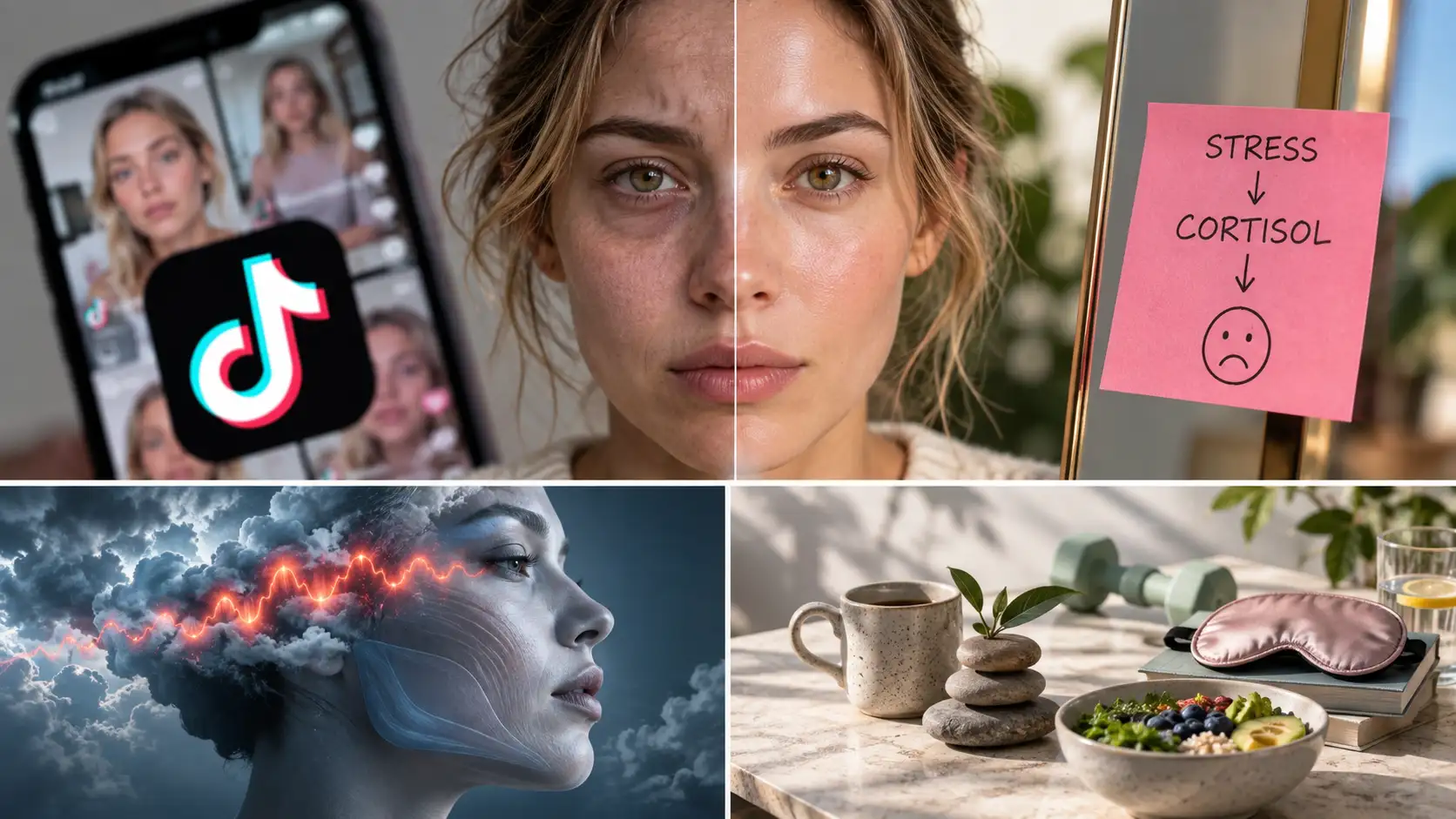
Cortisol Face Is Everywhere on TikTok. Here's What's Actually Happening to Your Face.
Notice how many people you know suddenly started blaming a hormone for their under-eye bags. It happened fast. One week nobody had heard the phrase "cortisol face," and the next, half of TikTok was diagnosing themselves with it between skincare hauls and green juice recipes.
The theory, as it travels through comment sections, goes something like this: chronic stress floods your body with cortisol, cortisol makes your face puffy and round, and if you just fix your cortisol, your jawline reappears like magic. Millions of views. Endless "cortisol detox" routines. A whole cottage industry of supplements promising to "reset" your stress hormone before brunch.
Here's the part nobody wants to hear: your face is probably not swollen because of cortisol in the way the trend implies. Endocrinologists have been fairly blunt about this on record, including doctors who've spoken with Vogue, Men's Health, and Prevention throughout 2026. Cortisol genuinely can cause dramatic facial rounding, but that's a hallmark of Cushing's syndrome, an uncommon endocrine condition that needs actual medical diagnosis, not a $30 powder.
So why does "cortisol face" feel so real to so many people? That's the interesting part, and it's where this article actually gets useful instead of just correcting the internet.
You've probably scrolled past at least one video where someone points at their own cheeks, says "this is cortisol face," and then transitions into a list of supplements they swear fixed it in ten days. The comment section fills up fast with people saying "wait, this is literally me," and within a week the algorithm has decided you need to see forty more versions of the same clip. That's how a niche endocrinology concept turned into one of the biggest wellness trends of 2026.
What Cortisol Actually Does (And Doesn't Do)
Cortisol is your body's primary stress hormone, released by the adrenal glands on a daily rhythm that's supposed to peak in the morning and taper off by night. It regulates blood sugar, blood pressure, inflammation, and your fight-or-flight response. It is not, under normal circumstances, sitting in your cheeks making you look bloated after a rough week at work.
In true Cushing's syndrome, cortisol levels stay abnormally high for a sustained period, often due to a tumor on the pituitary or adrenal gland, or from long-term use of certain steroid medications. That's when you see the textbook "moon face," along with a hump between the shoulders, thin skin that bruises easily, muscle weakness, and significant weight gain concentrated around the midsection. Cleveland Clinic and Mayo Clinic both describe this as a distinct medical condition with specific diagnostic criteria, not a mood or a Tuesday.
What most people experiencing "cortisol face" actually have is a cluster of very normal, very human stress responses that happen to show up on the face because the face is, unfortunately, where a lot of fluid and inflammation likes to collect. Poor sleep, dehydration, alcohol, salty takeout at 11 PM, and a nervous system stuck in overdrive; none of that requires a hormone tumor to explain puffiness. It just requires being a stressed person living a stressed life.
How Doctors Actually Check for a Real Cortisol Problem
Since so much of this trend hinges on the word "cortisol," it's worth knowing what an actual cortisol workup looks like, mostly because it's nothing like anything you'd do at home with a supplement subscription. Doctors typically start with a detailed history and physical exam, looking for the specific pattern of symptoms mentioned earlier rather than puffiness alone.
If Cushing's syndrome is genuinely suspected, testing usually involves measuring cortisol in saliva late at night, in urine over a full 24-hour period, or in blood after taking a dose of dexamethasone to see whether cortisol production suppresses the way it should. These tests exist because cortisol naturally fluctuates throughout the day and reacts to stress, caffeine, illness, and even the anxiety of getting blood drawn, so a single random blood test rarely tells the whole story on its own.
This matters because a lot of at-home "cortisol test kits" marketed alongside the trend measure a single snapshot and then hand you a number with little context for what's normal, elevated, or clinically meaningless noise. A slightly high reading on a stressful Tuesday doesn't mean you have a hormonal disorder; it might just mean you had a stressful Tuesday. Real diagnosis takes pattern, context, and a clinician who can interpret it, not a single test strip.
Why the Trend Resonates Even Though the Science Is Messier
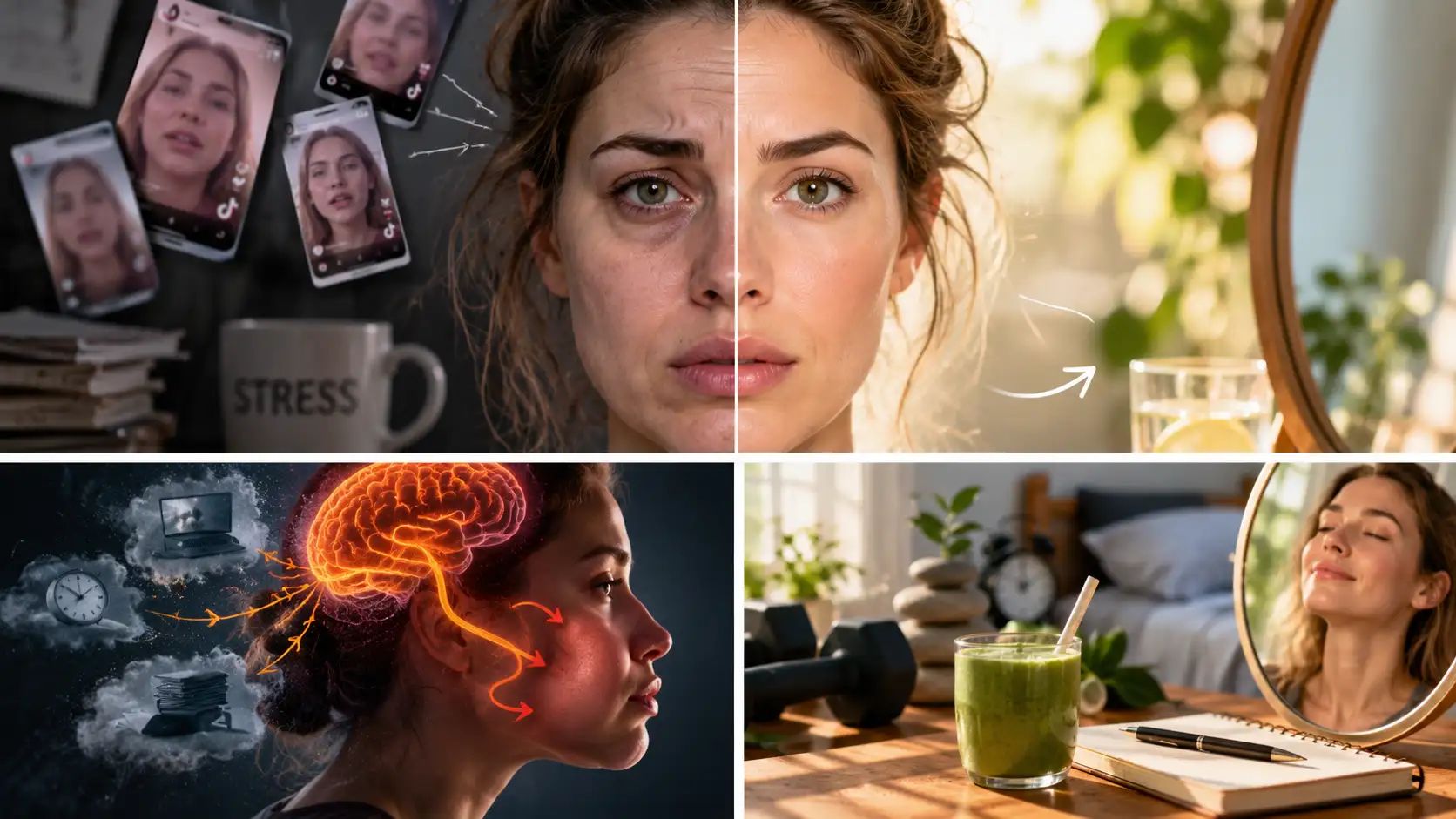
Here's the thing about viral health trends: they usually contain a kernel of truth wrapped in an oversimplified explanation, and this one is a textbook example. Chronic stress absolutely changes how you look, just not through the exact mechanism TikTok describes.
Think about what actually happens during a stretch of high stress. You sleep worse, so your body retains more fluid overnight. You reach for convenient, salty, or sugary food instead of cooking, which spikes water retention and inflammation. You might drink more wine than usual to unwind, and alcohol is famously dehydrating and inflammatory, contributing to that puffy, tired look the next morning. Cortisol is involved in this cascade, but it's one thread among many, not the sole villain.
There's also a simpler explanation for why this trend spread so fast: it gave people language for something they'd already noticed. Waking up with a rounder, more tired-looking face after a bad week isn't imaginary. Giving it a catchy name made it shareable, and shareable content about your own face is basically rocket fuel for engagement.
Calm and other wellness platforms have leaned into this by framing "low-cortisol living" less as a face-fixing hack and more as general stress hygiene, which is honestly the more accurate framing anyway.
There's a bit of a feedback loop happening too. Once someone believes their puffiness is "cortisol face," they start noticing it more, photographing it more, and comparing it against filtered videos of strangers who may or may not actually have the same thing going on. That heightened attention itself can become a low-grade stressor, which, ironically, can nudge cortisol and anxiety a little higher. The label isn't purely descriptive; it can actively shape how someone experiences their own reflection.
The Puffiness Is Real, Even If the Cortisol Explanation Is Oversimplified
Let's not throw out the whole trend just because the mechanism is fuzzy. Facial puffiness from stress and poor sleep is a documented, physiologically real thing, and there are legitimate reasons it happens.
Sleep deprivation disrupts lymphatic drainage, which is your body's natural fluid-clearing system. Skip a few nights of quality sleep and fluid pools more easily under the eyes and along the jaw. Add dehydration into the mix (which, counterintuitively, often makes your body retain more water, not less, as a defense mechanism) and you get that classic "stress bloat" look people are pointing at in their TikToks.
Blood sugar swings play a role too. Skipping meals during a busy, anxious day and then crashing into a carb-heavy dinner creates the kind of glucose rollercoaster that drives inflammation and water retention. Getting steady, balanced meals throughout the day does more for your face than most people expect, mostly because it keeps insulin and cortisol both behaving predictably instead of spiking.
None of this needs a dramatic hormone disorder to be true. It just needs a few weeks of bad sleep, inconsistent eating, and a stressful job, which describes an enormous percentage of adults at any given moment.
The Lymphatic System: The Actual Story Behind Morning Puffiness
Here's a piece of anatomy that deserves way more credit in this conversation than it gets: your lymphatic system. Unlike your circulatory system, which has the heart as a built-in pump, your lymphatic vessels rely largely on muscle movement, breathing, and gravity to move fluid along and clear out waste products and excess fluid from tissue.
Lying flat for eight hours overnight already slows that process down somewhat, which is part of why almost everyone looks a little puffier first thing in the morning regardless of stress levels. Add poor sleep quality, dehydration, high sodium intake, alcohol, or a sedentary day beforehand, and lymphatic drainage slows further, letting fluid linger longer in the soft tissue around the eyes and jawline where it's most visible.
This is part of why some of the "cortisol face" fixes that people report success with, cold water on the face, gentle facial massage, elevating the head slightly while sleeping, actually work, just not through the mechanism people assume. They're mechanically encouraging lymphatic drainage and reducing local fluid pooling, not lowering a hormone. It's a small distinction, but an important one if you're trying to understand what's actually helping.
Inflammation adds another layer on top of this. Highly processed foods, excess sugar, and chronic low-grade stress all promote a background level of inflammation that makes tissues hold onto fluid more readily. None of this requires a rare endocrine disorder to explain; it's simply how connective tissue and circulation behave under less-than-ideal conditions, and it's remarkably common.
What Actually Helps: The Realistic Version of "Low-Cortisol Maxxing"
If the TikTok version of fixing cortisol face is a bit theatrical, the underlying habits people are reaching for genuinely do support a calmer nervous system and a less puffy face. They're just less exciting than a 12-step morning routine filmed in soft lighting.
Sleep regularity matters more than almost anything else here. Going to bed and waking up at roughly the same time, even on weekends, helps your cortisol rhythm stay predictable instead of erratic, which in turn supports better lymphatic drainage overnight. This is unglamorous advice, but it's the one habit sleep researchers keep coming back to when people ask about looking less tired.
Hydration deserves more credit than it gets, though it's not just about chugging water. Electrolyte balance actually determines whether the water you drink stays where it's useful or gets stored as puffiness. Pairing water intake with proper mineral support through something like an electrolyte blend designed for better fluid balance can make a noticeable difference for people who are drinking plenty of water but still feeling swollen and sluggish.
Magnesium is one of the more consistently studied minerals for its role in the stress response. Low magnesium status has been linked to heightened cortisol reactivity and poorer sleep quality, which creates a frustrating loop: stress depletes magnesium, and low magnesium makes you handle stress worse. Addressing that gap through daily mineral support built around magnesium is one of the more evidence-backed, unsexy interventions available, and it doesn't require believing your face is literally inflating with hormone.
Gentle movement is worth mentioning specifically because intense exercise can sometimes backfire here. Long, grueling workouts on top of an already stressed system can push cortisol higher rather than lower, at least in the short term. Walking, easy cycling, swimming, or yoga tend to support a calmer stress response without adding another physical demand your body has to recover from.
Alcohol, Sugar, and the Habits Nobody Wants to Hear About
Nobody enjoys being told to drink less, so this section will be brief. Alcohol dehydrates you, disrupts sleep architecture even when it initially feels sedating, and drives inflammation, which is basically a checklist of everything that makes a face look puffier the next morning. Cutting back doesn't have to mean cutting it out entirely; even reducing frequency tends to show up in how rested you look within a couple of weeks.
Refined sugar and heavily processed snacks create similar problems through blood sugar spikes and subsequent crashes, which your body experiences as a mild stressor each time. That's another reason steady, protein-forward meals tend to outperform grazing on convenience food when the goal is a calmer system overall.
Caffeine deserves a brief mention here too, mostly because people tend to reach for more of it exactly when they're most stressed and sleep-deprived, which is precisely when it can backfire the hardest. A late afternoon coffee to push through a hard day often means a worse night of sleep, which means more puffiness and more stress the next day. It's not that caffeine is inherently the enemy; it's that the timing usually gets worse the more stressed someone becomes, creating a small daily cycle that's easy to miss while you're in it.
Sodium is worth a quick word as well, if only because the advice around it tends to get oversimplified into "eat less salt" without much nuance. Sodium itself isn't the villain; the mismatch between sodium and potassium intake tends to be the bigger issue for most people eating a typical Western diet heavy in packaged food. That's part of why mineral balance, rather than sodium restriction alone, tends to be the more useful lever to pull.
Protein intake specifically deserves a mention because amino acids are the building blocks for neurotransmitters that regulate mood and stress response, including serotonin and dopamine precursors. A diet consistently short on protein makes it harder for your body to manage stress efficiently, regardless of what your cortisol levels are technically doing.
Adaptogens: Where the Hype Gets a Little Ahead of the Evidence, But Not Entirely Wrong
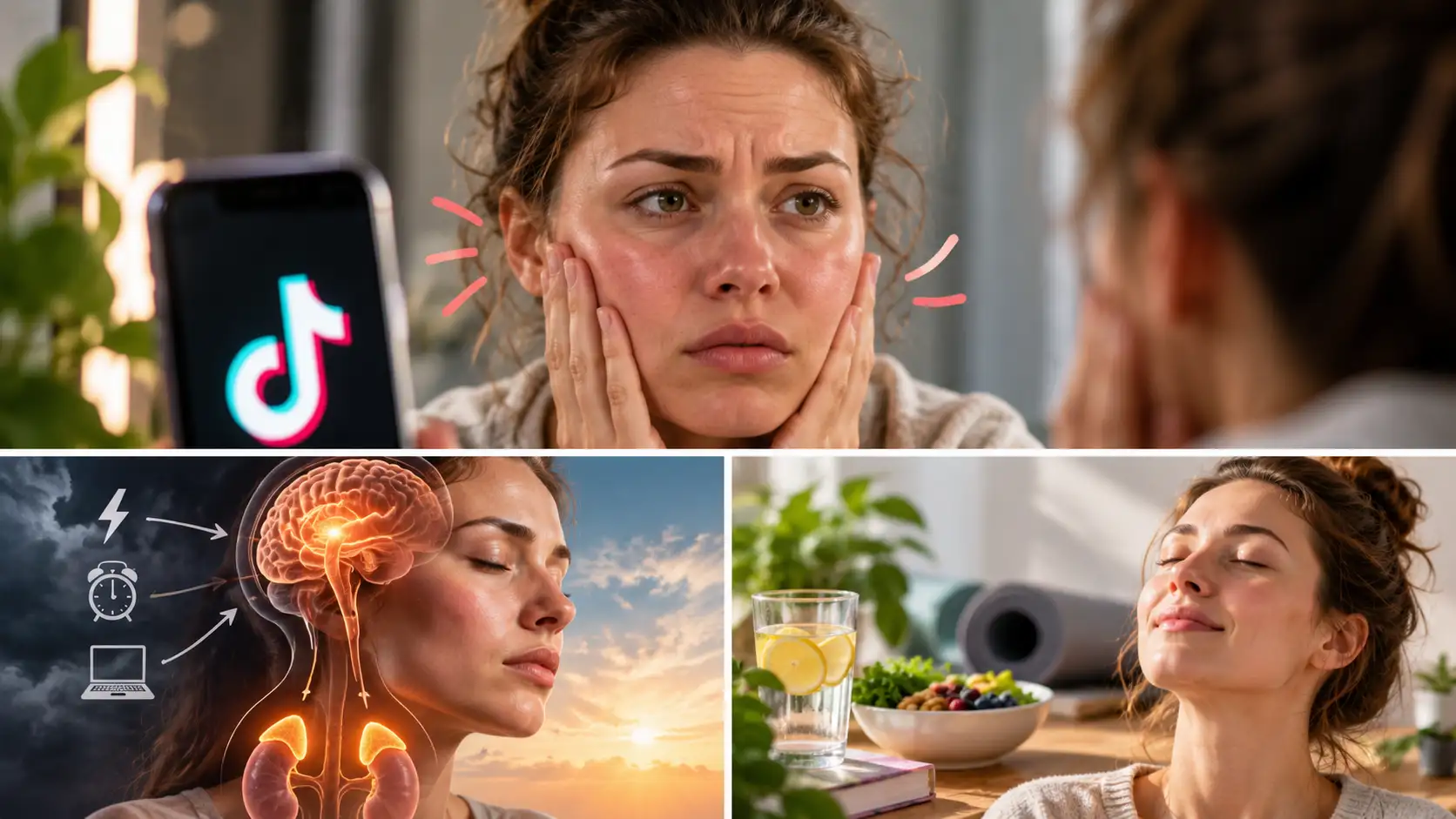
Adaptogens have become the poster children of the "low-cortisol lifestyle" movement, and this is where things get genuinely nuanced rather than purely dismissible.
Ashwagandha has some of the more promising research behind it among adaptogens, with several small human trials suggesting it may modestly lower cortisol levels and self-reported stress in chronically stressed adults. The effect sizes aren't dramatic, and results vary a lot depending on the person, the dose, and the extract used, but it's not nothing. For people looking to explore this route, a plant-based ashwagandha blend is a reasonable, low-risk place to start, provided expectations stay realistic.
Lion's mane occupies a slightly different lane; it's studied more for cognitive support and focus than direct cortisol reduction, but there's a plausible connection worth understanding. Feeling mentally scattered and unfocused is itself stressful, and anything that supports clearer thinking during a demanding stretch can indirectly ease the subjective experience of being overwhelmed. Mushroom-based cognitive support like this won't touch your cortisol receptors directly, but calmer, clearer thinking tends to translate into fewer stress spikes throughout the day.
Here's what actually matters more than the specific adaptogen you choose: consistency and realistic expectations. Adaptogens are not a substitute for sleep, food, or addressing the actual source of chronic stress in your life. They're a supporting player, not the lead.
Filling the Gaps: Why Basic Nutrition Still Wins
Before reaching for anything specialized, it's worth being honest about whether basic nutritional needs are even being met. Chronic stress increases the body's demand for several micronutrients, including B vitamins, vitamin C, and zinc, all of which play roles in the stress response and immune function.
A comprehensive daily multivitamin covering these baseline needs isn't glamorous content for a TikTok video, but it addresses a genuinely common gap, especially for anyone whose stressed-out eating pattern has drifted toward convenience food and skipped meals over the past few months.
Plant-based nutrient blends can serve a similar purpose from a different angle, particularly for people trying to increase overall micronutrient diversity without overhauling their entire diet overnight. A concentrated plant nutrient blend can help fill in produce-related gaps on weeks when cooking three vegetables a day feels impossible, which, if we're being honest, is most weeks for most people.
None of these approaches will erase stress from your life. They just remove some of the nutritional friction that makes your body handle stress worse than it needs to.
When Puffiness Is a Sign of Something More Than Stress
This is the part of the article that matters most, so it deserves its own space rather than getting buried in a paragraph about magnesium.
Occasional puffiness after a bad night's sleep, a salty meal, or a stressful week is normal and generally not something to worry about. Persistent, worsening facial rounding accompanied by other symptoms is a different situation entirely, and it's worth taking seriously rather than treating with another supplement stack.
- Facial and upper-body weight gain that doesn't match diet or activity changes
- A fatty hump developing between the shoulders
- Unusual bruising, thinning skin, or stretch marks appearing suddenly
- Persistent fatigue, muscle weakness, or mood changes alongside the puffiness
- Irregular periods or new-onset high blood pressure
If several of these show up together and stick around for weeks rather than days, that's a conversation for an actual doctor, not a comment section. Cushing's syndrome and other hormonal conditions are treatable once diagnosed, but they don't resolve with electrolytes or adaptogens, and delaying a real diagnosis in favor of a supplement routine can genuinely cost time you'd rather not lose.
So Is "Cortisol Face" Real or Not?
The honest answer sits somewhere in the middle, which admittedly makes for a less exciting headline than either extreme. Cortisol is rarely the direct sculptor of facial puffiness for the average stressed person scrolling TikTok at midnight. But chronic stress, through sleep disruption, dehydration, poor food choices, alcohol, and blood sugar chaos, absolutely can make your face look rounder, tireder, and less like the one you recognize in old photos.
The fix isn't a single hormone hack. It's the boring, repeatable stuff: consistent sleep, steady hydration and minerals, enough protein, gentle movement instead of punishing workouts, less alcohol, and maybe a supporting adaptogen or two if that fits your budget and preferences. None of it will happen overnight, and none of it comes with the satisfying instant reveal that makes for good video content.
What it does offer is something more durable than a viral trend: an actual reduction in the day-to-day stress your body is carrying, which tends to show up on your face eventually anyway, just without the dramatic hormone origin story.
Individual results vary based on sleep quality, baseline stress levels, diet, and overall health; this article is for general educational purposes and is not a substitute for personalized medical advice.
Consult a doctor or qualified healthcare provider before starting any new supplement, particularly if you have an existing health condition, take medication, or are pregnant or breastfeeding.
This article contains affiliate links, and we may earn a commission from qualifying purchases at no additional cost to you.
Sources: Cleveland Clinic overview of Cushing's syndrome, Mayo Clinic endocrinology resources on cortisol and adrenal function, Harvard Health Publishing on chronic stress and the body, sleep regularity research from sleep medicine journals, clinical trials on ashwagandha and cortisol reduction, research on magnesium status and stress reactivity, Prevention and Men's Health 2026 reporting on the "cortisol face" trend, and endocrinologist commentary shared publicly on TikTok and covered by Vogue in 2026.